Can You Move a Plumbing Vent During a Roof Replacement?
Planning a new roof and want to move that plumbing vent pipe? Learn when you can relocate a roof vent, what codes require, and how plumbers and roofers should coordinate.
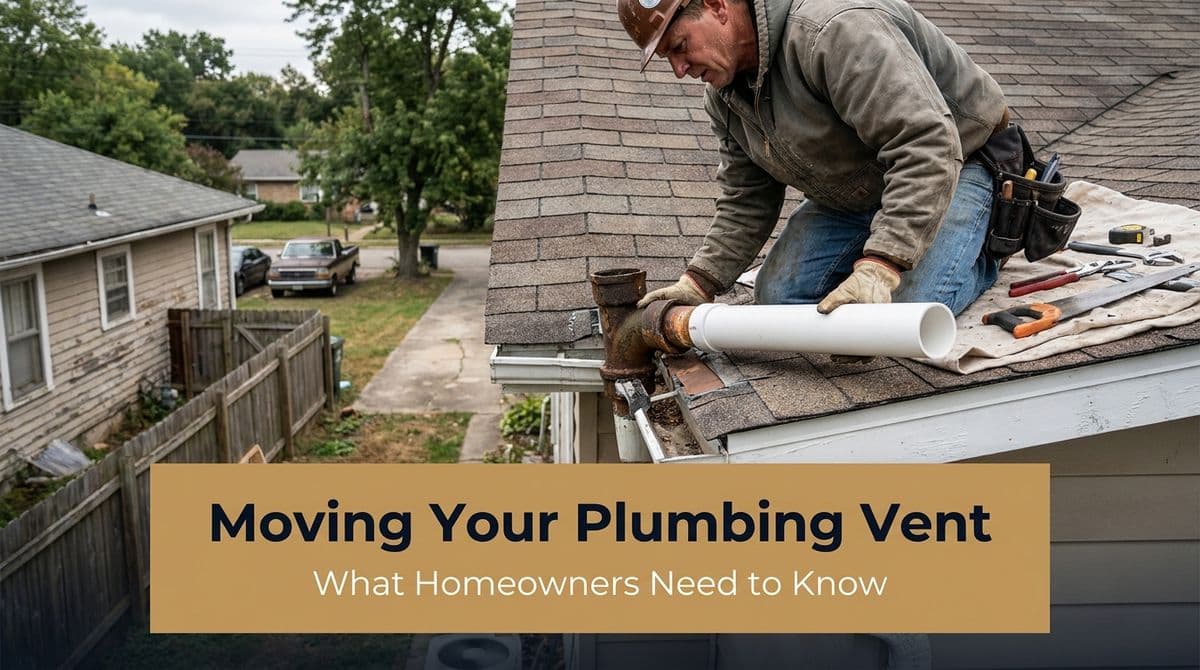
Can You Move a Plumbing Vent Pipe During a Roof Replacement?
We recently got a call from a homeowner — we’ll call her Sarah here — who was getting ready to replace her roof. Her roofer had suggested moving a plumbing vent pipe that sticks out of the roof to a different spot, and told her, “You should really talk to a plumber before we do anything with that.” That’s how she ended up talking with our team.
As we walked through her questions, we realized a lot of homeowners wonder the same thing: Can you move a plumbing vent pipe during a roof replacement, and is it a good idea? Let’s break down what we shared with Sarah so you know what to expect before you start tearing off shingles.
What That Pipe on Your Roof Actually Does
We started by explaining to Sarah that the pipe coming through her roof is almost certainly a plumbing vent stack. It’s not for your furnace or your dryer — it’s part of your home’s drain and waste system.
Your plumbing vent pipe has a few key jobs:
- Release sewer gases safely above the roofline
- Let fresh air into the drain system so water and waste flow smoothly
- Prevent traps from being siphoned, which keeps those U-shaped traps full of water and blocks odors
If that vent is undersized, blocked, or relocated incorrectly, you can end up with slow drains, gurgling noises, and sewer smells inside the house — exactly what we all want to avoid.
Is It Even Legal to Move a Plumbing Vent?
Sarah’s first concern was whether relocating the vent pipe would violate building codes. We told her that, in most cases, yes, you can move a vent — but it has to be done correctly and to code.
Local plumbing codes typically dictate:
- Minimum vent pipe size based on the number of fixtures
- How far a vent can run horizontally before turning up through the roof
- Required distance from windows, doors, and other openings
- Minimum height above the roof surface
That’s why your roofer was right to tell Sarah to call us. Roofers are experts in shingles and flashing, but the plumbing side — sizing, layout, and code compliance — is our territory.
When It Makes Sense to Relocate a Roof Vent
In Sarah’s case, the vent pipe was smack in the middle of a roof area where her roofer wanted to install an uninterrupted run of shingles. There were a few reasons moving it made sense:
- Roof layout and aesthetics: The vent was in a visually awkward spot from the street.
- Future solar panels: She was thinking about adding solar later and didn’t want a vent in the way.
- Chronic leak concern: That particular penetration had been patched a couple of times already.
If you’re redoing your roof anyway, it can be a smart time to adjust the vent location to improve the look of the roof or make room for skylights, solar, or other upgrades — as long as the plumbing layout allows it.
How We Evaluate Whether a Vent Can Be Moved
Before we tell anyone “yes, we can move that,” we want to look at the whole system. With Sarah, we walked her through what our on-site visit would include.
Here’s what we typically check:
- Where the vent originates: Which fixtures (toilets, sinks, showers) are tied into that vent line?
- Pipe size and material: Is it properly sized already, and what is it made of (PVC, ABS, cast iron)?
- Attic access: Can we reach the pipe in the attic or between floors to reroute it cleanly?
- New exit location: Will the new roof penetration still meet code clearances and height rules?
Sometimes, we can simply extend the vent over a bay or two in the attic and pop it out in a better location. Other times, the existing plumbing layout makes relocation difficult or not worth the cost.
Plumber vs. Roofer: Who Does What?
Another question Sarah had was whether her roofer could “just move the pipe while he’s up there.” We told her it should be a team effort, but with clearly defined roles.
- Plumber’s job: Reroute the vent piping inside the home, ensure proper slope and sizing, and bring everything to code.
- Roofer’s job: Cut the new roof opening, install the vent flashing/boot, and make the roof watertight around the new penetration.
Ideally, we coordinate the timing so we’re on site before or during the roof work. That way, you’re not left with an open hole in the roof or a capped vent that isn’t functioning properly.
What the Process Typically Looks Like
When we schedule this kind of job, the steps often go like this:
- Consultation: We visit the home, inspect the attic and plumbing layout, and confirm the new vent location.
- Planning with the roofer: We coordinate where and when the new penetration will be made.
- Rerouting the pipe: We cut, reroute, and reconnect the vent line to rise in the new location, securing it properly.
- Roof penetration and flashing: The roofer installs the boot and shingles; we verify the connection and seal around the pipe.
- Final check: We test fixtures, listen for gurgling, and make sure everything is drawing air properly.
Done right, you end up with a clean-looking roof and a vent system that still works exactly as it should.
Potential Problems If a Vent Is Moved Incorrectly
We also made sure Sarah understood what can go wrong if someone moves a vent without thinking through the plumbing side. Common issues include:
- Sewer odors: Traps can be siphoned dry if venting isn’t correct, allowing smells into the home.
- Slow or noisy drains: Toilets that bubble or sinks that gurgle often point to venting problems.
- Leaks and stains: Poor flashing or improperly sealed boots can lead to roof leaks.
- Code violations: Non-compliant venting can create headaches if you sell the home or have an inspection.
Most of these issues are preventable when a licensed plumber and a qualified roofer work together and follow code.
Thinking About Moving a Roof Vent on Your Home?
If you’re planning a roof replacement and your roofer has mentioned moving a plumbing vent — or you’re just tired of looking at a pipe in the wrong place — it’s worth getting a professional opinion before any shingles come off.
We’re always happy to take a look, talk through what’s possible, and coordinate with your roofing contractor so your vent system stays safe, code-compliant, and out of the way of your plans for the roof.