Why Is My Outdoor AC Unit Smoking or Hissing? What to Do Now
Outdoor AC unit smoking or hissing? Learn what to turn off immediately, what the noises might mean, and when it’s time to call an HVAC professional.
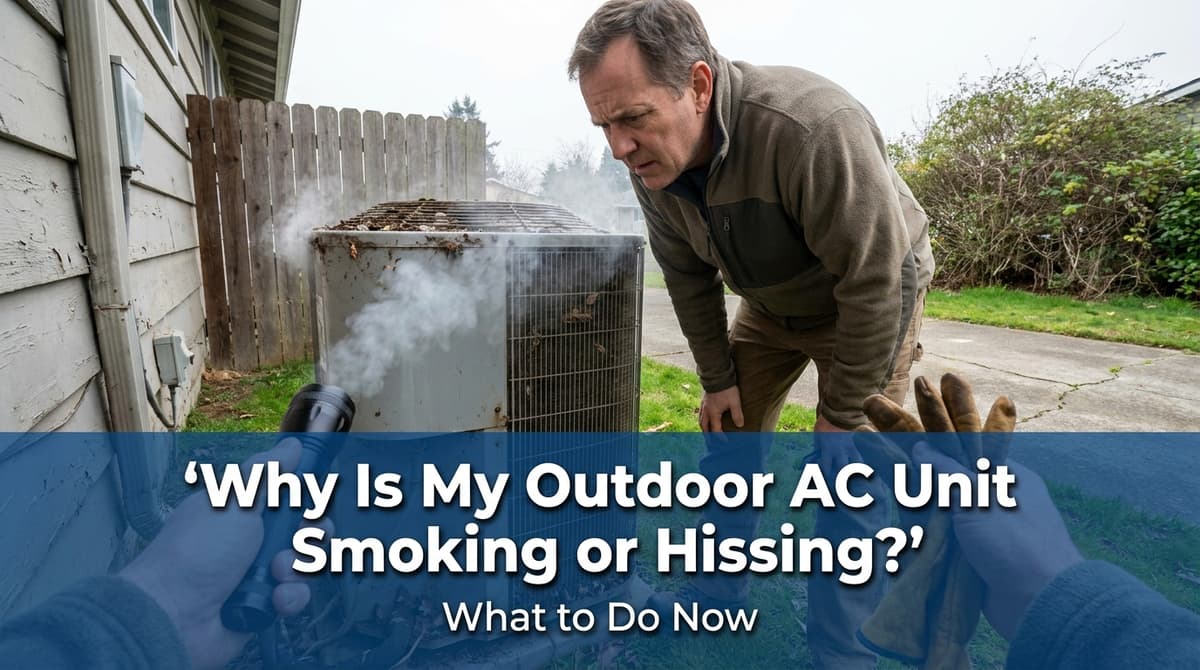
“My Outdoor AC Unit Is Smoking!” — A Call That Got Our Attention
We recently got a call from a homeowner — let’s call him Ryan — who lives here in town with a central air system that’s been working fine for years. Out of nowhere, he looked outside and saw his outdoor AC unit literally smoking.
Ryan did the right thing: he went to the electrical panel, shut off the breaker, and the smoke started to die down. But then he noticed something else — the unit kept hissing. That’s when he decided this wasn’t a DIY project and called us to ask, “What do people usually do in this situation?”
If you’re reading this because you’re seeing smoke or hearing hissing from your outdoor unit, you’re not alone — and you’re right to be concerned. Let’s walk through what might be happening, what to do immediately, and when it’s time to call a pro.
First Things First: Is It Actually Smoke?
Not every “smoke” call turns out to be a fire. Sometimes homeowners see steam, dust burn-off, or fog and understandably think the worst. But in Ryan’s case, there were two clear signs of trouble:
- Visible smoke from the outdoor unit
- Persistent hissing sounds even after power was shut off
Those are red flags. When we hear that on the phone, we’re usually thinking about things like burned electrical components or a possible refrigerant leak.
What To Do Immediately If Your Outdoor Unit Is Smoking
Here’s exactly what we told Ryan — and what we recommend any homeowner do:
- Turn off power at the thermostat
Switch your system to OFF at the thermostat so it doesn’t try to run again. - Shut off the outdoor unit at the breaker
Find the dedicated AC breaker in your electrical panel and turn it OFF. If you’re not sure which one it is, turn off the ones labeled “AC,” “A/C,” or “condenser.” Ryan did this quickly, which helped limit damage. - Back away if you smell burning or see heavy smoke
If there’s a strong burning smell, crackling, or heavy smoke, keep a safe distance. Don’t open the unit or remove any panels yourself. - Only call the fire department if:
- You see active flames
- Smoke is coming toward the house or inside
- You smell strong burning plastic or wiring
- Then call an HVAC professional
Once things are powered down and stable, schedule a service visit. With Ryan, we booked him for first thing the next morning to diagnose the damage.
What That Hissing or Smoking Could Mean
When Ryan mentioned both smoke and a hissing sound, a few likely culprits came to mind. Here are the most common issues we see with outdoor units:
1. Burned Electrical Components
This is often our first suspicion when there’s real smoke. Inside your outdoor unit you’ve got:
- A contactors and relays that control power
- A large capacitor that helps the compressor and fan start
- Wiring and connections
When a capacitor or contactor fails, it can overheat and smoke or melt insulation. You might notice:
- Unit trying to start, then shutting off
- Strong electrical/burning smell
- Fan not spinning but humming sound
Do not reach in and try to spin the fan by hand or bypass anything. Those parts can hold a dangerous electrical charge even with power off.
2. Refrigerant Leak (That Hissing Noise)
The hissing Ryan heard could be refrigerant escaping from a leak. In older units (his was at least 15+ years old), metal components can corrode and lines can rub through over time. Signs of a possible refrigerant leak include:
- Hissing or gurgling around the outdoor unit
- Visible oil or oily residue on fittings or coils
- AC suddenly stops cooling well or blows warm air
Refrigerant leaks are not a DIY repair. The system is under pressure and handling refrigerant requires EPA certification and specialized tools. If you suspect this, keep the unit off and wait for a tech.
3. Compressor Failure in an Older Unit
Ryan mentioned his system was at least 15 years old. At that age, a failing compressor is very possible. When compressors fail, they can:
- Overheat and cause smoking from inside the cabinet
- Trip breakers repeatedly
- Make loud buzzing or humming with no cooling
If the compressor is burned out on a unit that old, we’ll often have an honest conversation about repair vs. replacement. In many cases, it’s more cost-effective to put that money toward a new, more efficient system.
When You Can Wait vs. When You Need a Pro ASAP
Here’s how we generally advise homeowners who call in with concerns like Ryan’s:
You Can Usually Wait for a Scheduled Visit If:
- There’s no active smoke or flames
- The unit is completely off at the breaker
- The house is safe and you’re comfortable without AC for a bit
You Need Same-Day or Emergency Help If:
- Smoke is thick or getting worse
- You see sparks or glowing components
- There’s a strong burning smell inside the home
When Ryan called, the smoke had stopped once he shut off the breaker and there were no flames, just the hissing sound. That allowed us to schedule him for first thing the next morning instead of a middle-of-the-night emergency visit.
How To Reduce the Chances of This Happening
While you can’t prevent every failure, a few simple habits can reduce the risk of a smoking or hissing outdoor unit:
- Yearly professional maintenance to catch worn electrical parts and small refrigerant leaks early
- Keep the area around the unit clear of plants, debris, and items that can restrict airflow and cause overheating
- Listen for changes in how your system sounds — new buzzing, clicking, or hissing is worth a call before something fails dramatically
- Know the age of your system; once you’re in that 12–15+ year range, talk to your tech about what to expect and when to start planning for replacement
Not Sure What That Noise or Smoke Means? Call Before You Guess
Ryan did exactly what we hope every homeowner will do: shut it down, keep safe, and call for help. When something is smoking or hissing, guessing wrong can make a minor problem much worse — or unsafe.
If your outdoor AC unit is smoking, hissing, or just acting “off,” turn it off at the thermostat and breaker, and reach out. We’ll walk you through what to do in the moment and get a technician out to diagnose whether it’s a simple electrical repair, a refrigerant issue, or time to talk about replacement.
You don’t have to figure it out alone — that’s what we’re here for.