Why Is My Washing Machine Backing Up Into My Toilet?
Washer water backing up into your toilet is a serious warning sign. Learn common causes, what it means for your main line or septic, and what to do right now.
“My Washer Backed Up Into My Toilet” – What’s Really Going On?
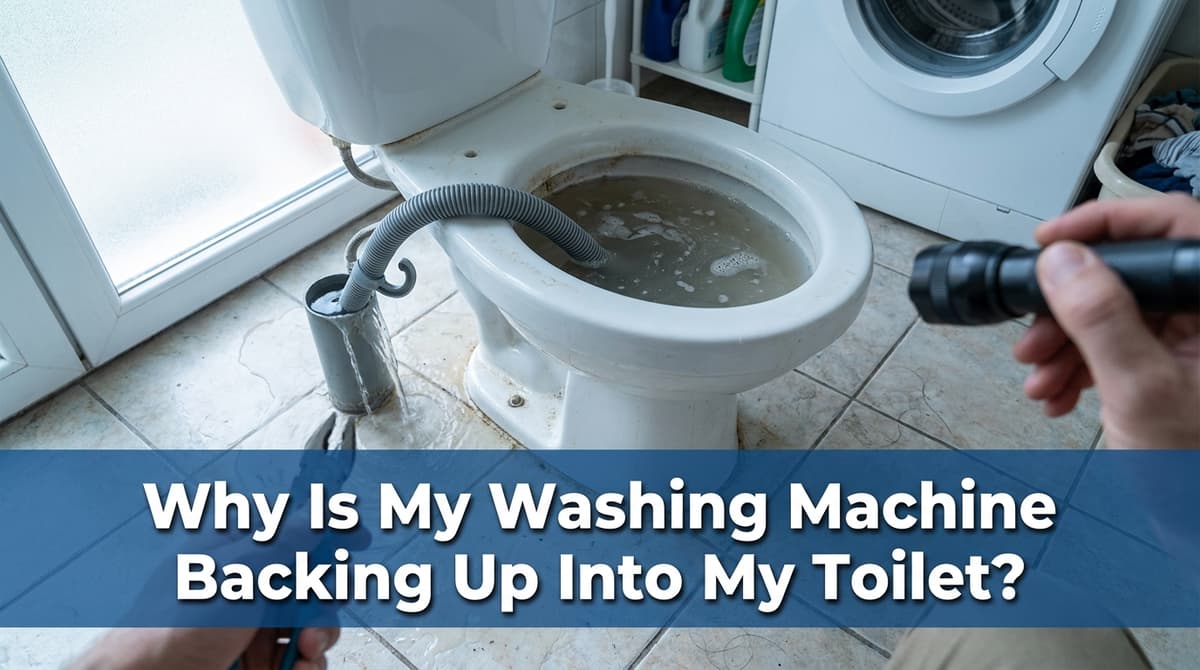
We recently got a call from a homeowner — let’s call her Linda — who was more than a little freaked out. She’d started a load of laundry, walked downstairs a bit later, and found water rising up in her downstairs toilet. No one had flushed it, but the bowl was filling and threatening to overflow.
Linda told us, “This toilet is right by where the main line goes out to my septic, so I’m really worried this means something serious.” She did exactly the right thing: she shut off the washing machine and called for emergency plumbing help.
If you’re seeing water from your washer show up in a toilet, tub, or floor drain, you’re dealing with more than just a quirky plumbing “glitch.” It’s usually a warning sign from your main drain or septic system — and it’s important to take it seriously.
Why Your Washing Machine Is Backing Up Into the Toilet
Your washing machine, toilets, sinks, showers, and tubs all connect to the same main drain line that runs out of your house to either a city sewer or a septic tank. When everything is working properly, water flows one way: out.
When Linda’s washer drained, that big rush of soapy water tried to head down the main line. But instead of flowing out, it hit resistance. Since water has to go somewhere, it chose the path of least resistance — the downstairs toilet.
Here are the most common reasons that happens:
- Partial or full clog in the main sewer line
Grease, wipes, paper towels, feminine products, or years of buildup can narrow the line until it can’t handle a big discharge from the washer. - Tree root intrusion
Roots find tiny cracks in older sewer pipes, sneak in, and expand like a net that catches debris. A heavy drain cycle from the washer can be enough to make a partial blockage act like a full one. - Septic tank or leach field trouble
If you’re on septic and the tank is full or the leach field is saturated or failing, wastewater can’t leave the tank easily. That resistance shows up inside as backups at low fixtures, like a basement or first-floor toilet. - Improper or collapsed piping
In some homes, older or DIY plumbing jobs have odd connections, bellies (sags) in the pipe, or sections that have collapsed. When the washer dumps a lot of water quickly, those weak spots are where it all backs up.
What This Tells You About Your Main Line or Septic
When backup shows up in a toilet after running the washing machine, that’s a clue we pay close attention to on calls like Linda’s. Toilets are directly tied into the main line and are usually some of the lowest fixtures in the house, especially on a lower level.
Here’s what that usually means for your system:
- City sewer homes: It’s likely a main line issue — a clog, roots, or broken pipe — somewhere between your house and the street. In some cases, the blockage can be right under or just outside the foundation.
- Septic system homes: The problem can be in the main line, the septic tank, or even the leach field. If the septic tank is overdue for pumping, or the leach field is waterlogged, the whole system can “back up” under heavy use like a wash cycle.
In Linda’s case, she was exactly right to suspect the downstairs toilet was tied closely to the main line leading to her septic. Backups there are often the first sign the system is struggling.
Warning Signs It’s More Than a One-Time Glitch
During emergency calls like this, we’ll usually ask a few quick questions to help narrow things down before we arrive:
- “Do other fixtures gurgle when you use water elsewhere?”
- “Does the toilet bubble when the washer drains or when you shower?”
- “Have you noticed slow drains throughout the house, not just in one bathroom?”
- “Are there any sewer smells near drains or outside near the septic area?”
If you’re answering “yes” to these, the issue is almost certainly in the main line or septic system, not a simple toilet or washer drain problem.
What to Do Right Now If Your Washer Backs Up Into the Toilet
Until a plumber or septic professional can get there, here are the steps we walk homeowners like Linda through over the phone:
- Stop using water immediately
Turn off the washing machine mid-cycle if needed. Avoid flushing toilets, running faucets, or taking showers. Every gallon you send down has to find a way back up. - Check other low fixtures
Look at basement or downstairs tubs, showers, and floor drains. If you see standing water or hear loud gurgling, tell your plumber — it helps us diagnose faster. - Don’t try harsh chemical drain cleaners
They rarely fix main line problems and can damage pipes or create a hazard for anyone who works on them later. - If you’re on septic, avoid driving or parking over the septic area
Heavy vehicles can worsen a failing leach field or damage fragile lines.
How We Diagnose and Fix the Problem
When we arrive to handle a backup like Linda’s, we typically follow a step-by-step process:
- 1. Visual inspection and basic tests
We check which fixtures are affected, run small amounts of water in strategic spots, and listen for gurgling. This tells us roughly where the restriction might be. - 2. Clear the line
We’ll usually start with a professional drain machine (sewer snake) or hydro jetter on the main line cleanout to remove blockages from grease, wipes, roots, or debris. - 3. Camera inspection (when needed)
If we suspect roots, a collapsed pipe, or a chronic issue, we’ll send a camera down the line so you can literally see what’s going on and where. - 4. Septic evaluation (for septic homes)
If you’re on septic and the tank is full or the leach field isn’t draining, we may recommend pumping and, if necessary, further septic diagnostics.
How to Prevent Future Washer-to-Toilet Backups
Once Linda’s line was cleared and flowing again, we talked through some ways to reduce the chances of a repeat emergency. Here are the tips we share with most homeowners in this situation:
- Schedule regular main line maintenance if you have older pipes, lots of trees, or a history of clogs.
- Pump your septic tank on schedule (often every 3–5 years, depending on household size and usage).
- Only flush the “3 Ps”: pee, poo, and (regular) toilet paper — no wipes, even if they say “flushable.”
- Spread out laundry loads so you’re not sending huge volumes of water through a borderline system all at once.
- Watch for early warning signs like periodic gurgling, slow drains throughout the house, or occasional mild backups — and call before it turns into an emergency.
When to Call for Emergency Service
If your washing machine is backing up into a toilet, especially a downstairs or basement toilet, treat it as more than a nuisance. It’s often your first clear warning that the main line or septic system needs attention.
If you’re seeing repeat backups, multiple fixtures affected, strong sewer odors, or any signs of wastewater near your home’s foundation or yard, it’s time to get a professional out right away. That quick call, like Linda made, can be the difference between a manageable repair and a much bigger mess.